A short wander through comb, dance, heather, and why a jar of honey is more work than it looks. No medical claims. Just the insects.
Hexagons are not decoration
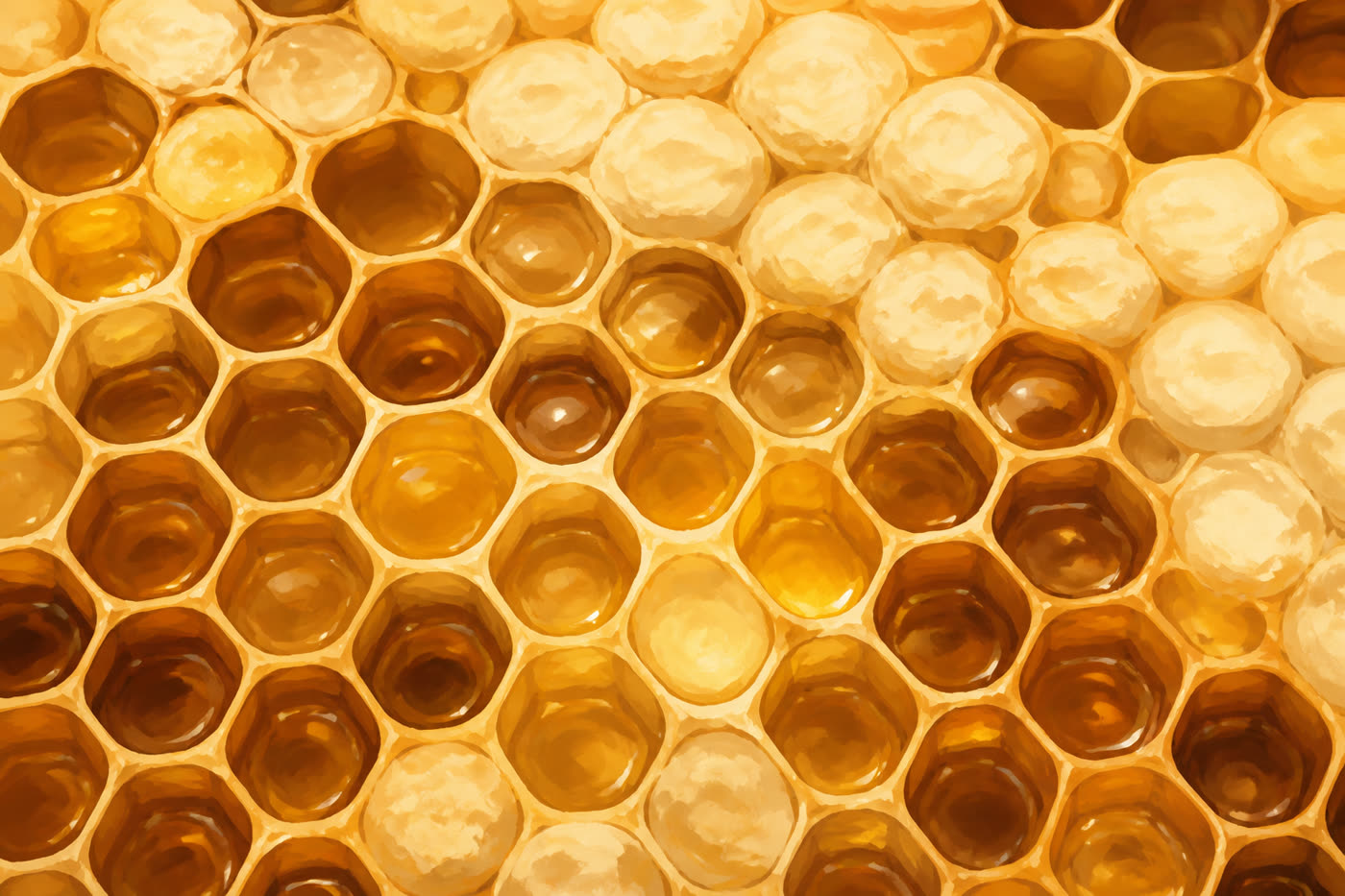
Bees build comb in hexagons because that shape holds the most honey for the least wax. Circles would leave gaps. Squares waste wax on corners. A hexagon tiles tight, like a packed suitcase that also happens to be geometry.
Five eyes, and a pair of baskets
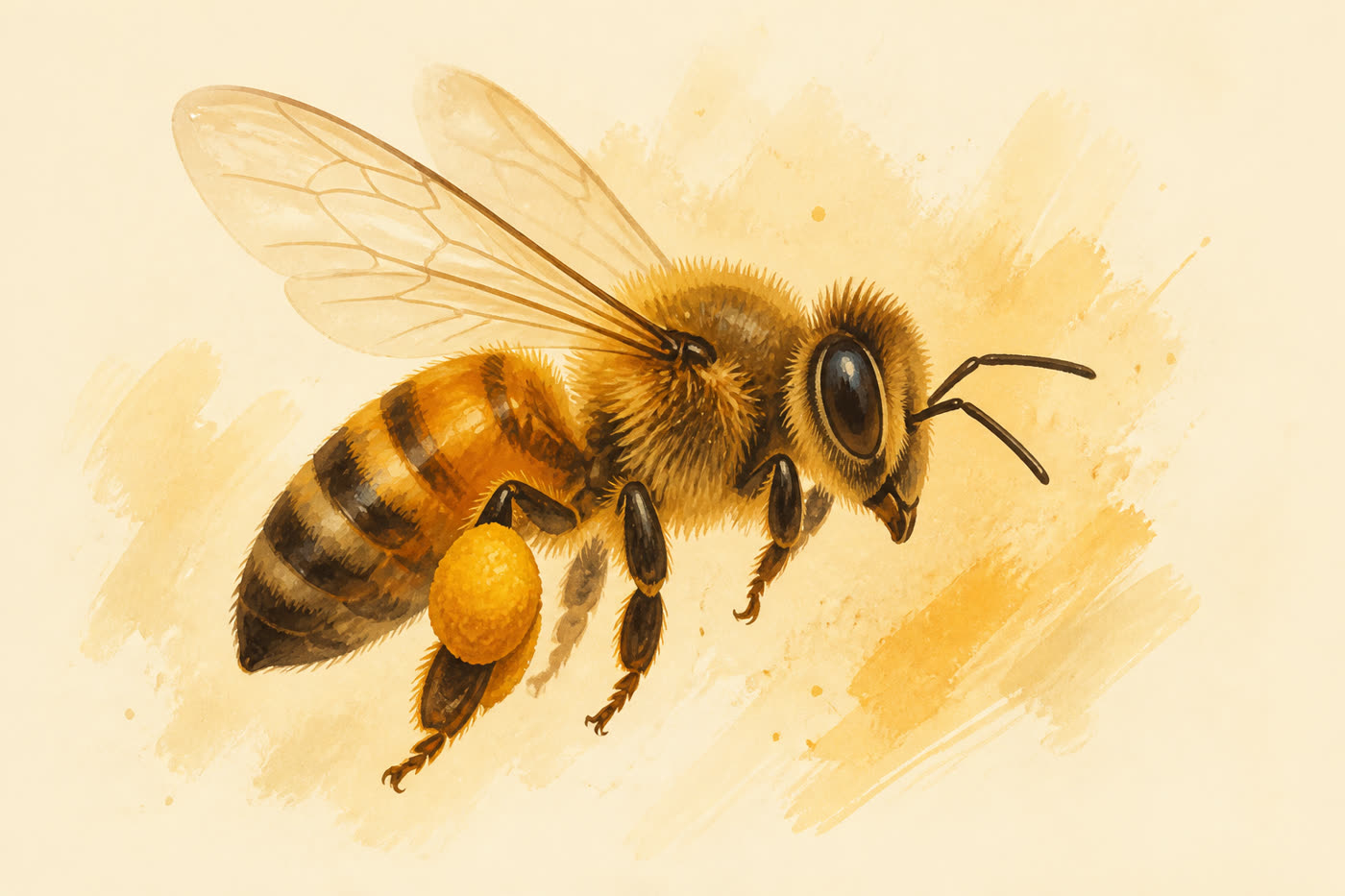
A honeybee has two large compound eyes and three small simple eyes on the top of the head. The hind legs carry pollen baskets. That bright lump on the back leg is not a stain. It is the shopping, packed for the flight home.
A jar is a lot of flying
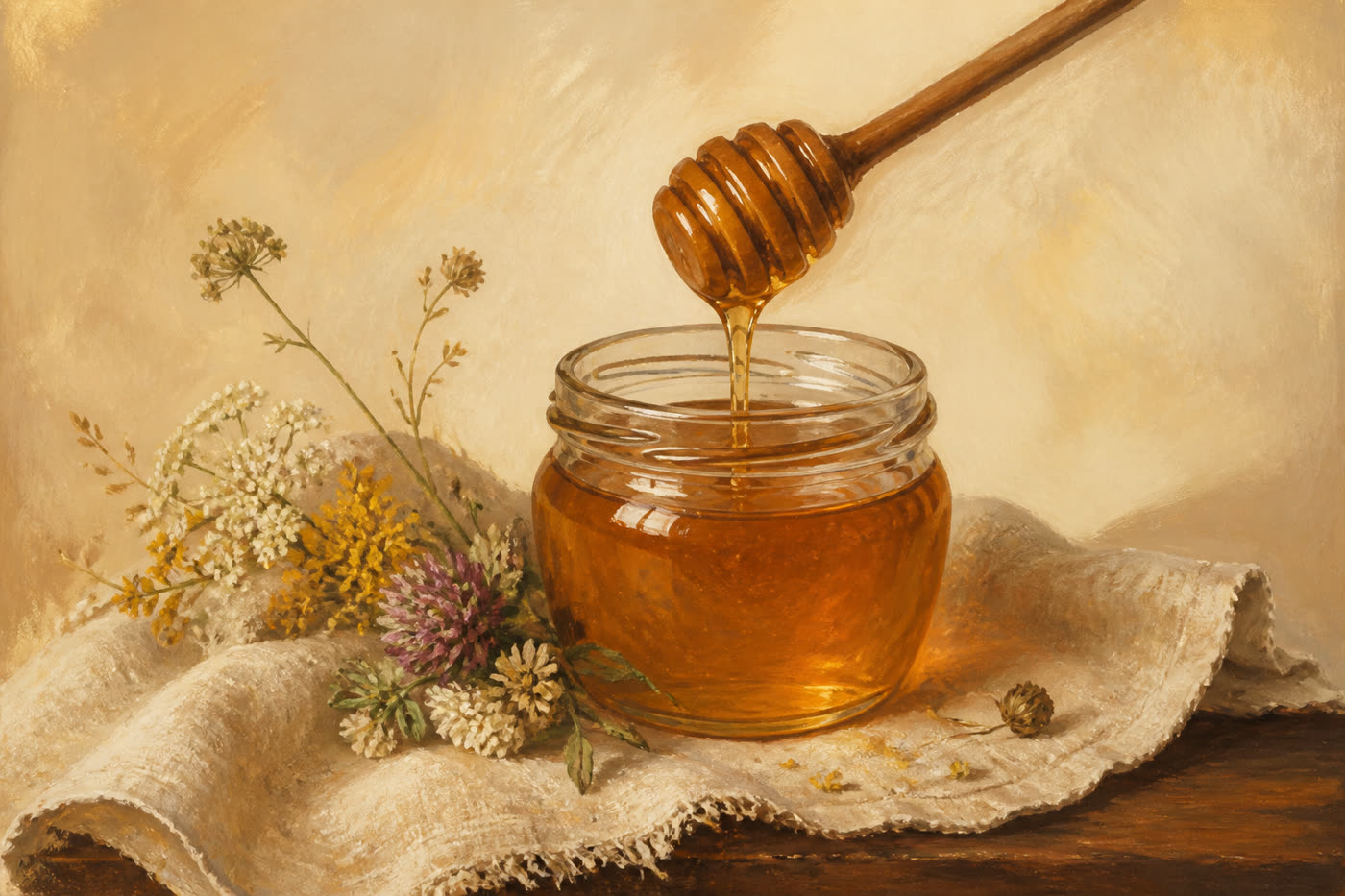
A summer worker may live about six weeks. In that time she does not fill a jar on her own. A single jar of honey is the work of a colony: thousands of flower visits, nectar carried home, water driven off in the comb until it will keep.
Sealed honey, kept dry, does not spoil in the ordinary kitchen sense. It is low in water and naturally acidic. It can still crystallise. That is normal, not a fault.
Heather honey has a trick
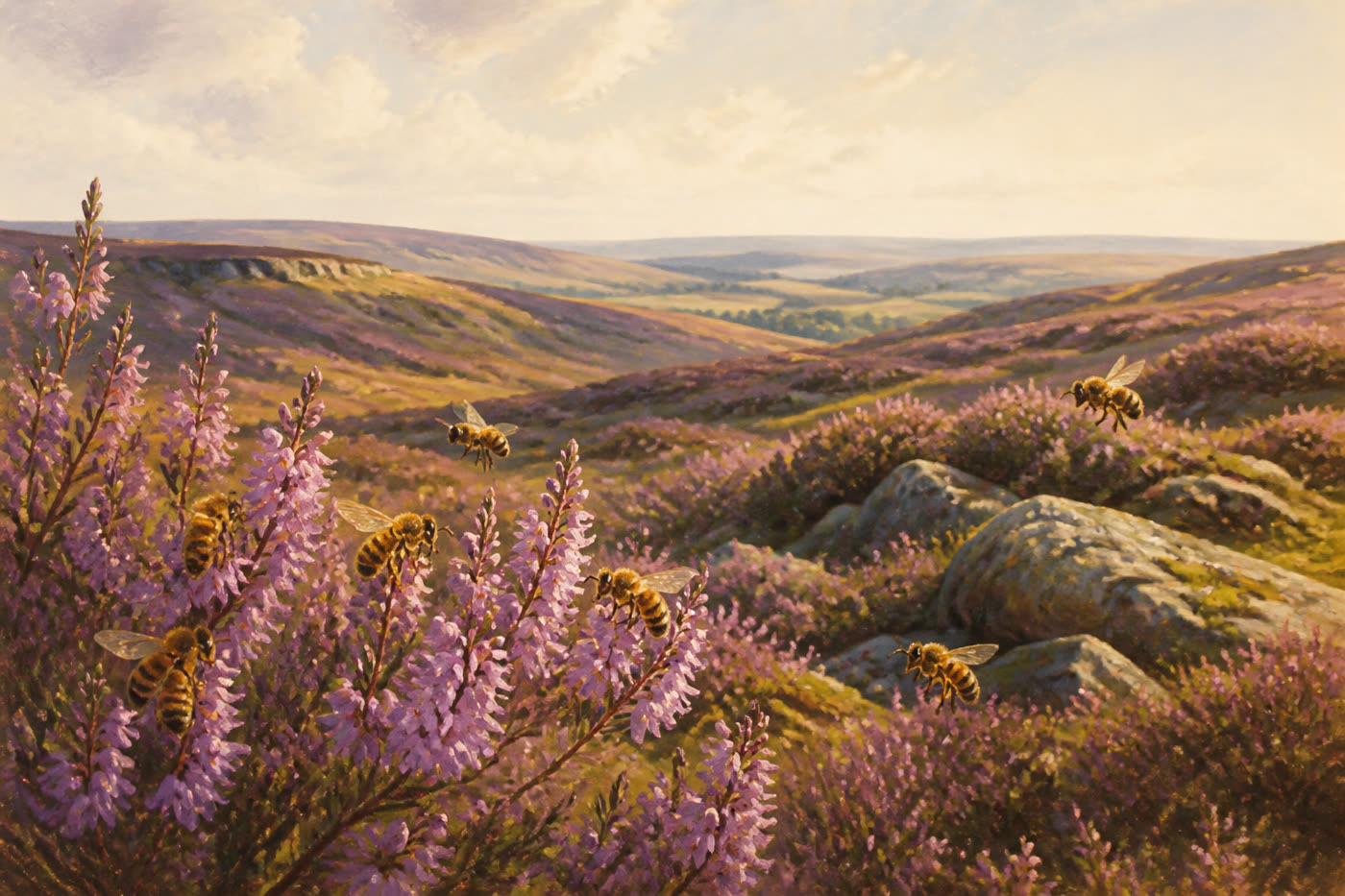
On UK uplands, ling heather gives a honey that can sit like a jelly in the jar, then loosen when you stir it. Beekeepers call that thixotropic. It is one reason a moorland jar tastes and feels different from a lowland wildflower one.
🐝
The waggle dance is a map
A returning forager can tell her sisters where the forage is. On the comb she runs a figure of eight. The angle of the waggle run, relative to gravity, matches the angle of the flowers relative to the sun. Distance is in the length of the waggle. No clipboard required.
Winter is a huddle, not a hibernation
Honeybees do not sleep the winter away. They form a cluster and shiver their flight muscles to keep the queen warm, eating the stores they put by. A queen may live several years. The short-lived summer workers are replaced by a winter generation built for the wait.
These notes are general natural history, not medical advice, and not a reason to buy any particular jar. If you keep bees, your local association will know the forage where you live.